
Back to index
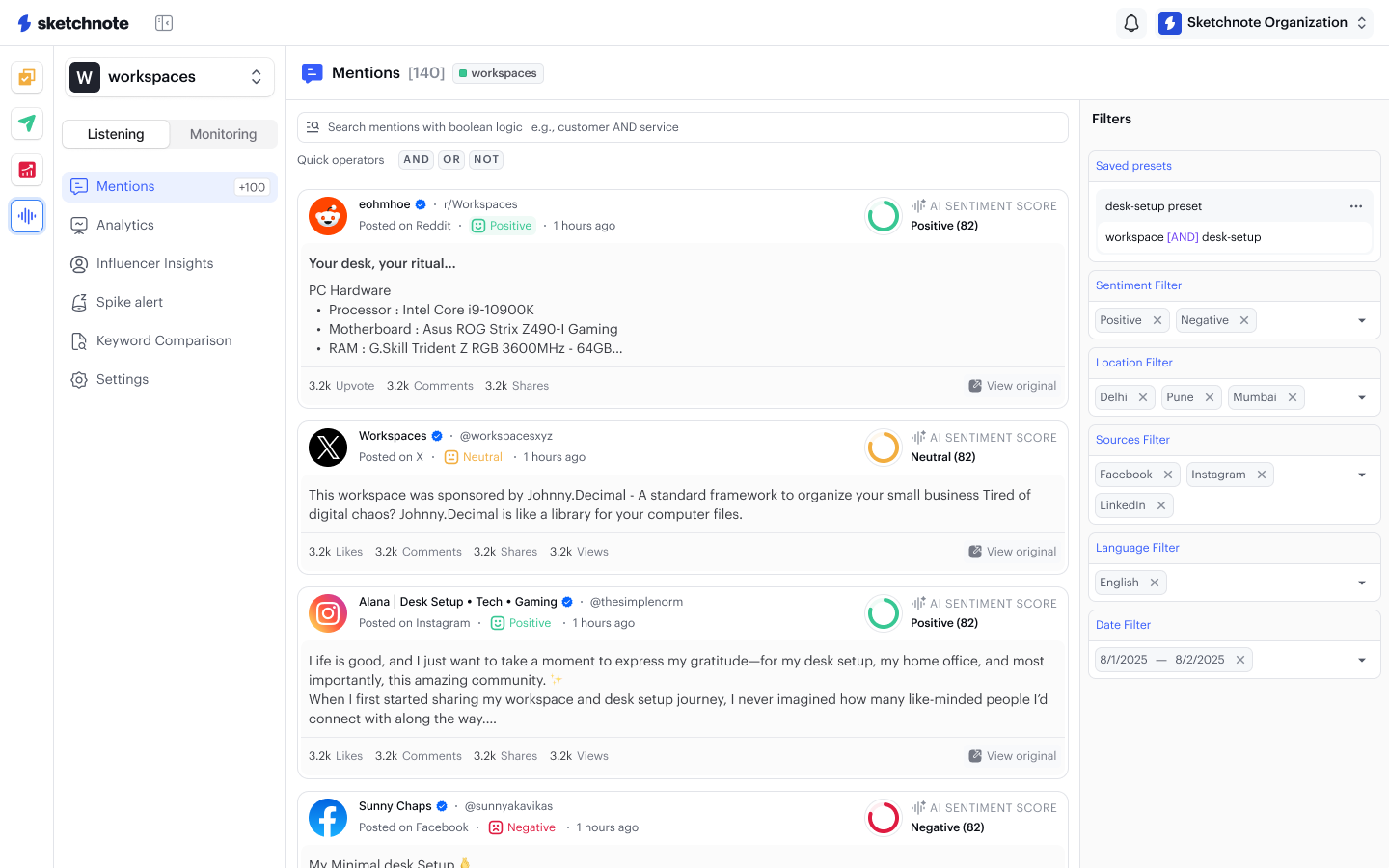
Sketchnote’s Social Listening
Designing AI social listening product and brand that secured six paying clients in 8 weeks

Prototyped with Claude Code

Details

Web App (SaaS)

2 month
Role

Product Design

UX Research
Team

Vijay Saiwal
(Product Designer)

Kavya Menon
(Development Head)
Shreek Pawar
(CEO)

Background
How this project began
This social listening project did not start as a standalone initiative. It emerged organically from an ongoing engagement - the Sketchnote Social Planner - a product designed to help social media teams and agencies plan, schedule, and manage content across platforms from a unified dashboard.
While deep in the Social Planner design process - conducting user research, building out the content calendar, approval workflows, and analytics features - one of our key clients raised a concern that went beyond scheduling.

We love what you're building with the planner. But our bigger day-to-day problem isn't scheduling posts - it's knowing what people are saying about us online and being able to react before things spiral. We're flying blind on brand reputation right now.
- Client stakeholder, during a Social Planner review session
Problem Statement
Social media professionals tasked with monitoring brand reputation, tracking industry conversations, and responding to crises do not have a tool that turns raw mention data into clear, actionable intelligence - especially in high-pressure, time-sensitive moments.
Existing social listening tools either overwhelm users with unfiltered noise or gatekeep powerful features behind complex, expensive interfaces designed for enterprise analysts. As a result, users spend more time triaging, formatting, and context-switching than they do making decisions.

How might we design a social listening experience that proactively surfaces what matters most, reduces manual effort across the listening-to-action workflow, and empowers users to respond confidently - whether they're at their desk or in the middle of an event?
My Approach
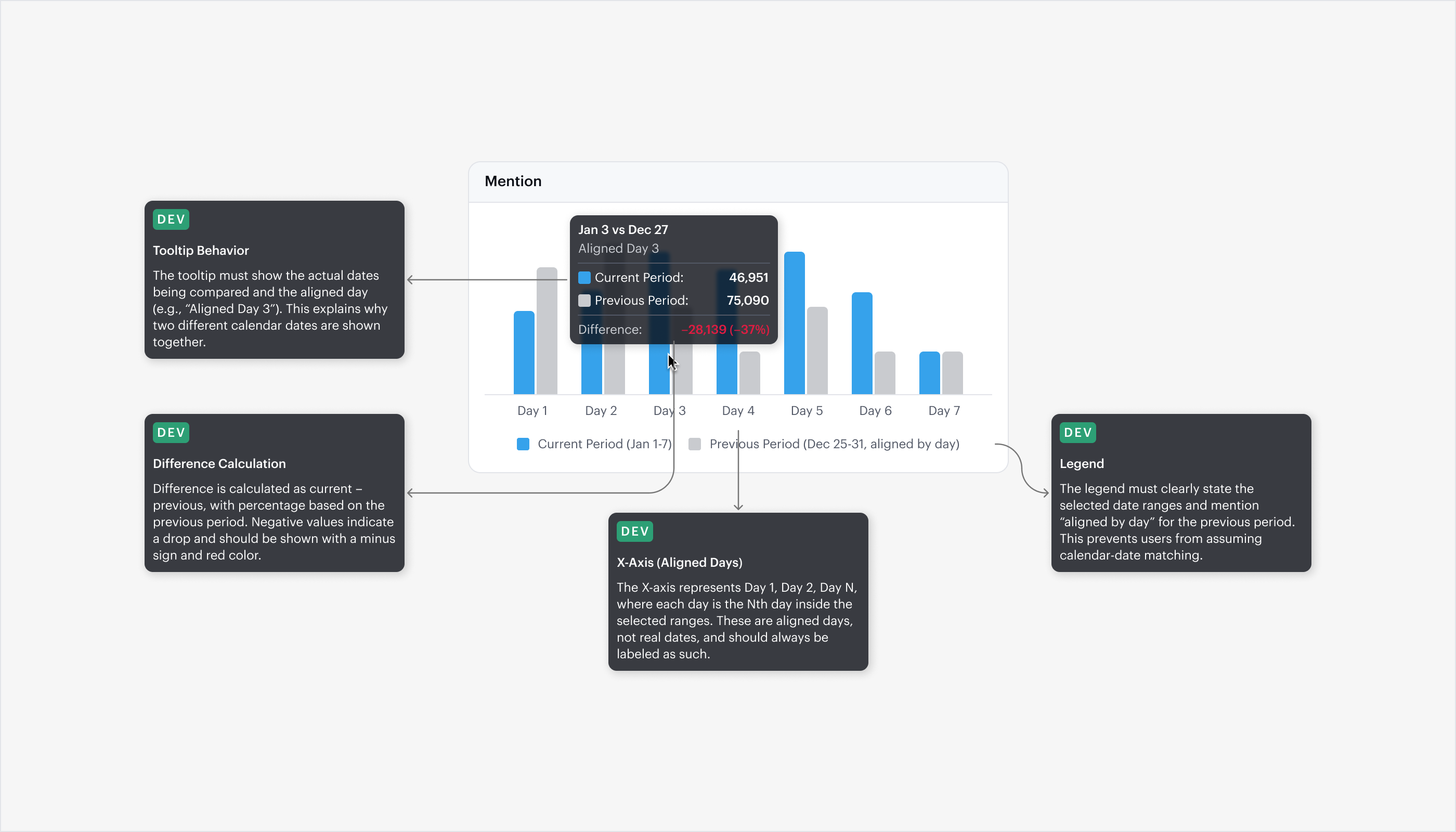
I started with user research and conducted 5 user interviews with social media managers, brand strategists, and communications leads, and ran a competitive analysis across Brand24, Mention, Sprout Social and Meltwater.
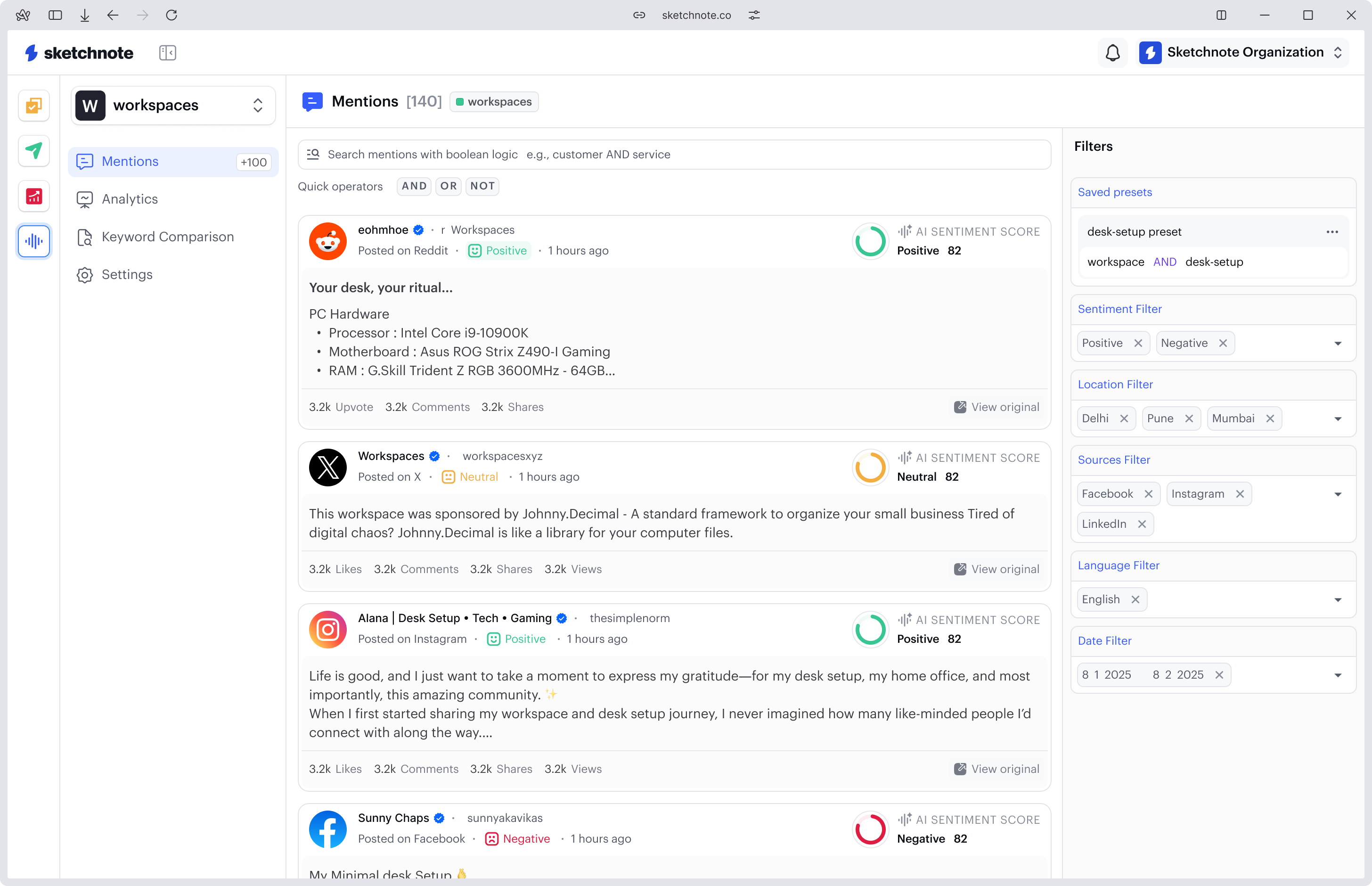
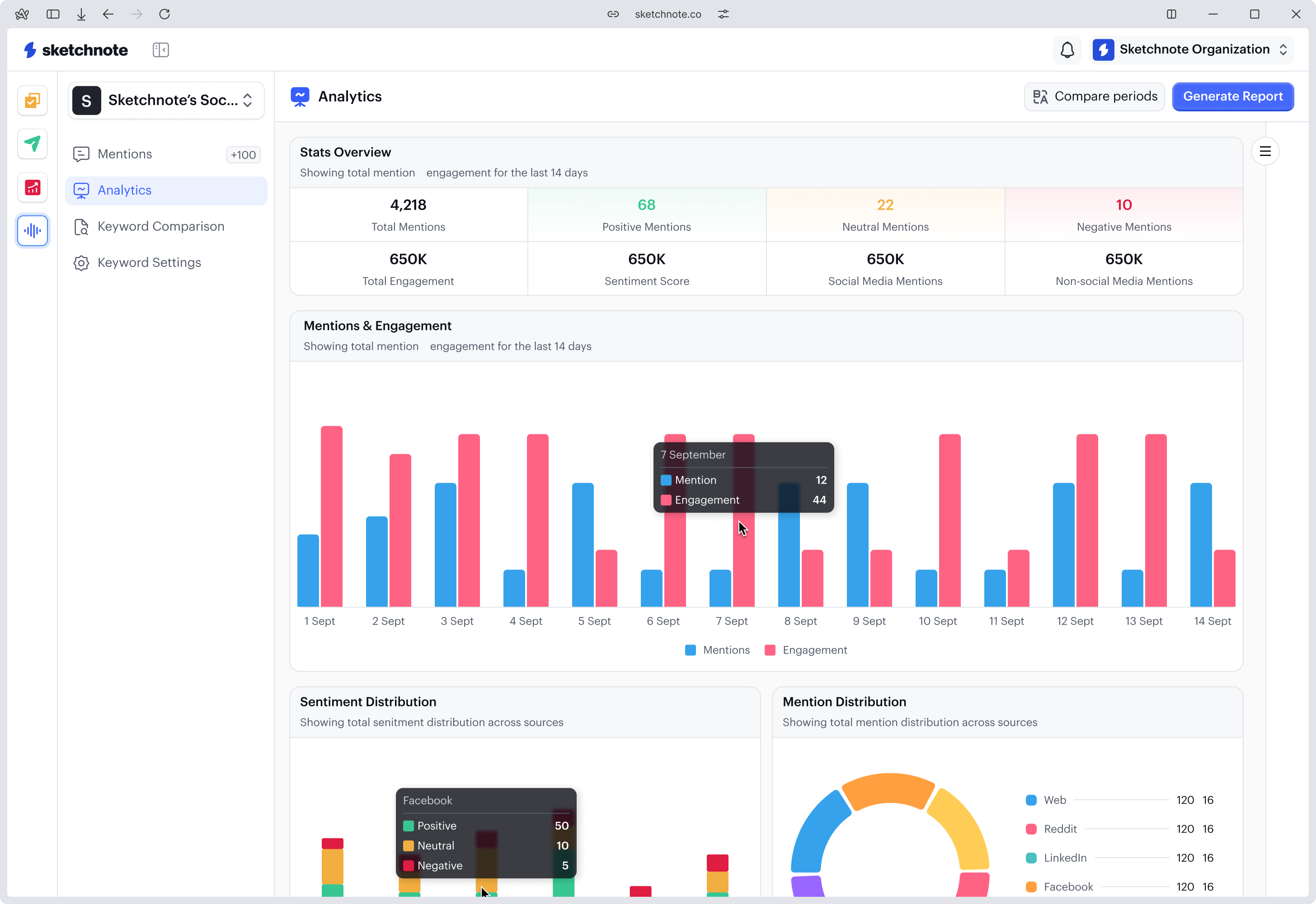
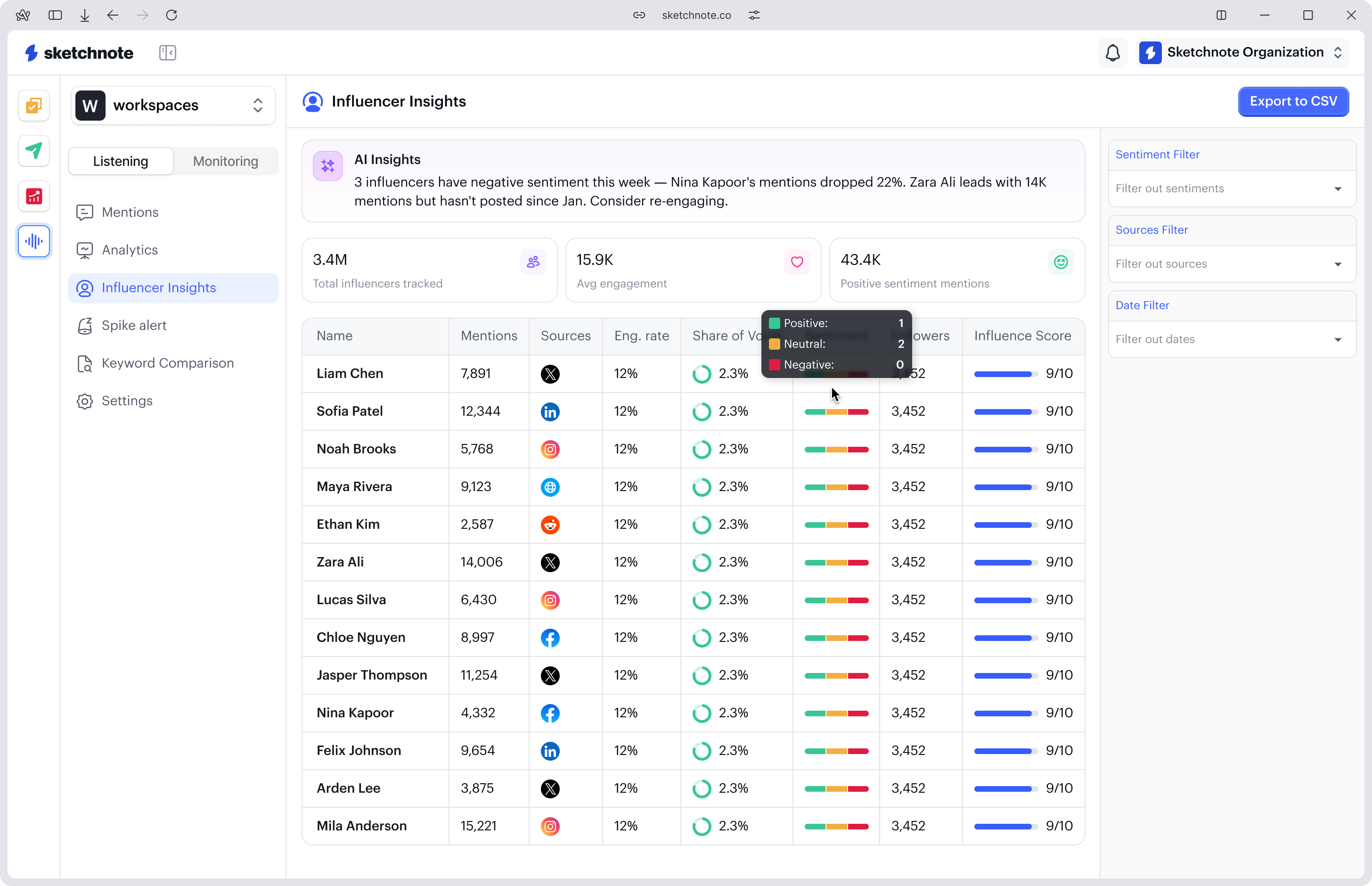
I get to know that users mainly face issues on lack of data driven analytic, Sentiment analysis is rule-based not ML-driven, no AI based summaries that gives actionable steps and there is no advance filtering for mentions.
Back to index
Sketchnote’s Social Listening
Designing AI social listening product and brand that secured six paying clients in 8 weeks
Prototyped with Claude Code


Sketchnote
Client

2025
Year

32 Weeks
Timeline

Product Design & Strategy
Service

Background
How this project began
This social listening project did not start as a standalone initiative. It emerged organically from an ongoing engagement - the Sketchnote Social Planner - a product designed to help social media teams and agencies plan, schedule, and manage content across platforms from a unified dashboard.
While deep in the Social Planner design process - conducting user research, building out the content calendar, approval workflows, and analytics features - one of our key clients raised a concern that went beyond scheduling.
We love what you're building with the planner. But our bigger day-to-day problem isn't scheduling posts - it's knowing what people are saying about us online and being able to react before things spiral. We're flying blind on brand reputation right now.
- Client stakeholder, during a Social Planner review session
Problem Statement
Social media professionals tasked with monitoring brand reputation, tracking industry conversations, and responding to crises do not have a tool that turns raw mention data into clear, actionable intelligence - especially in high-pressure, time-sensitive moments.
Existing social listening tools either overwhelm users with unfiltered noise or gatekeep powerful features behind complex, expensive interfaces designed for enterprise analysts. As a result, users spend more time triaging, formatting, and context-switching than they do making decisions.
How might we design a social listening experience that proactively surfaces what matters most, reduces manual effort across the listening-to-action workflow, and empowers users to respond confidently - whether they're at their desk or in the middle of an event?
My Approach
I started with user research and conducted 5 user interviews with social media managers, brand strategists, and communications leads, and ran a competitive analysis across Brand24, Mention, Sprout Social and Meltwater.
I get to know that users mainly face issues on lack of data driven analytic, Sentiment analysis is rule-based not ML-driven, no AI based summaries that gives actionable steps and there is no advance filtering for mentions.